 How-to
How to Find Private Birding Guides in Senegal
Last Updated: 20 November 2026
Quick Summary
You can find private birding guides in Senegal through community directories such as Birdingpal and BirdForum, or through specialist tour operators and referrals, which carry more weight. Wherever you find them, verify each guide's licence, insurance, birding knowledge and recent references before paying a deposit.
- Birdingpal lists a half-day of guiding in Senegal at £25.
- Ask any operator for two past client references and a species list.
- Work through four verification layers: licence, insurance, knowledge and references.
- Sort targets into Sahelian, wetland and forest zones, with three zones in ten days realistic.
- November to March is generally regarded as a good time for birdwatching in Senegal.
Table of Contents
- Where to Find Private Birding Guides in Senegal
- Vetting Independent Guides vs Agency-Booked Guides
- Birding Guide Questions to Ask Before You Book
- Building a Senegal Birdwatching Itinerary Around Your Targets
- The Best Time for Birdwatching in Senegal
- What a Senegal Birding Tour Cost Actually Covers
- Navigating Language Barriers and Ethical Birding
- Plan Your Private Birding Trip with West African Birding
- Frequently Asked Questions
Where to Find Private Birding Guides in Senegal
Finding private birding guides in Senegal starts with two routes: community directories and specialist tour operators. Both work, but they demand different levels of effort from you. A single 2026 Birdquest itinerary recorded 345 species in Senegal, which shows what is at stake when the guiding is right (Birdquest Senegal tour report). At West African Birding, we have watched birders waste the first three days of a trip on logistics because they booked a generalist driver instead of a specialist. Below, we show you exactly where the good guides list themselves and how to tell them apart. You can also browse our birding tours to see the guide services we offer.
Community Directories and Forums
Community platforms are the cheapest starting point. Birdingpal's Senegal listings connect travelling birders with local contacts, and a half-day of guiding is listed at £25. BirdForum runs member-vetted directories where guides are subject to feedback and moderator checks. These routes suit confident, independent birders. They rarely suit anyone who needs transport, permits and accommodation arranged in one booking.
Specialist Tour Operators and Referrals
Operator referrals carry more weight than directory listings. Birding guides who have worked the Senegal-Gambia border for decades, such as Ebrima Sidibeh with 30 years of experience, appear through operator networks rather than open directories (Gambia Birding Tours guide profiles). Ask any operator for two past client references and a species list from their last Senegal departure. A guide who cannot supply either is a gamble.
Vetting Independent Guides vs Agency-Booked Guides
Independent guides cost less and offer flexibility; agency-booked guides cost more and carry accountability. The NeoGeo DMC guidance on Senegal birdwatching is clear that a guide is not obligatory but is highly recommended, and that framing sums up the trade-off. An independent guide may be excellent, but you carry the risk alone if a vehicle breaks down or a permit is missing. The real work is not choosing between the two models; it is verifying whichever one you pick.
Most birders vet a guide by asking for a species list and a reference. That is a start, but it does not tell you whether the guide is licensed, insured, or legally permitted to guide inside a national park. A structured check closes that gap. Work through the following four verification layers in order, and keep written evidence for each.
Layer 1: Licence and registration. Guides operating in national parks and reserves should hold the accreditation required by the relevant park authority. Ask for the guide's accreditation number and the authority that issued it. A legitimate guide will supply this without hesitation. A guide who deflects to a tour operator's licence is not the same as a licensed guide, and you should treat the two as distinct.
Layer 2: Insurance and liability. Ask for a certificate of liability insurance that names the guiding business, not just the vehicle hire company. Independent guides sometimes operate under a vehicle's third-party cover and assume that is enough. It is not, and if you are injured on a remote track the difference matters. Request the certificate in advance and check the expiry date.
Layer 3: Birding knowledge, tested. A species list proves a guide has seen birds; it does not prove they can find them on demand. Ask two targeted questions: which call or habitat cue they use to locate a difficult target such as the Egyptian Plover on the Senegal River, and how they adjust a route when a target is missed. A working guide answers with specifics; a driver with binoculars answers in generalities. Cross-check the answer against dated trip reports on eBird, which show what was actually recorded and when.
Layer 4: References and past-client contact. Ask for two references from the last twelve months and contact them directly, not through the guide. Ask what went wrong as well as what went right. A common pattern is that references praise the guide's company but reveal that permits or fuel were extras on the ground. That is the information you need before a deposit, not after.
Agency booking folds all four layers into one contract. You pay for that structure, and on a tight itinerary through Djoudj and the Ferlo it is usually money well spent. The table below shows what each model typically covers, but treat it as a starting point for questions rather than a substitute for the four checks.
| Factor | Independent Guide | Agency-Booked Guide |
|---|---|---|
| Upfront cost | Lower | Higher |
| Flexibility | High | Fixed itinerary |
| Accountability | You carry the risk | Operator carries the risk |
| Transport included | Rarely | Usually |
| Park permits handled | Sometimes | Yes |
| Licence and insurance evidence | You must request it | Operator should supply on request |
| Best for | Repeat visitors, confident birders | First-timers, photographers |
Watch out: a guide who cannot produce a park accreditation number or an insurance certificate before you pay a deposit is asking you to carry a risk you cannot see. Walk away rather than negotiate.
Birding Guide Questions to Ask Before You Book
Ask five questions before any deposit leaves your account. The answers separate a working ornithologist from a driver with binoculars. Guide experience in the region ranges from nine years to three decades, so the answers matter more than the years alone (Birding Gambia guide profiles).
- Which target species did you find on your last five Senegal tours?
- Do you guide in English and French, and who drives the vehicle?
- How many guests do you take, and can you run a private departure?
- What happens if we miss a target species, and is there a contingency day?
- Can you itemise park fees, fuel, accommodation and guiding separately?
Question five exposes padding faster than any other. Once you have satisfactory answers, check tour dates and availability before the calendar fills for peak season.
Building a Senegal Birdwatching Itinerary Around Your Targets
Build the itinerary backwards from your target list, not forwards from the map. A Senegal birdwatching itinerary that starts with species and works back to geography will always beat a fixed circuit. The country holds over 580 bird species, so no single trip covers everything (Senegal Birding Experience tour scope). The private guide's value is in translating your list into a route that fits the days you have.
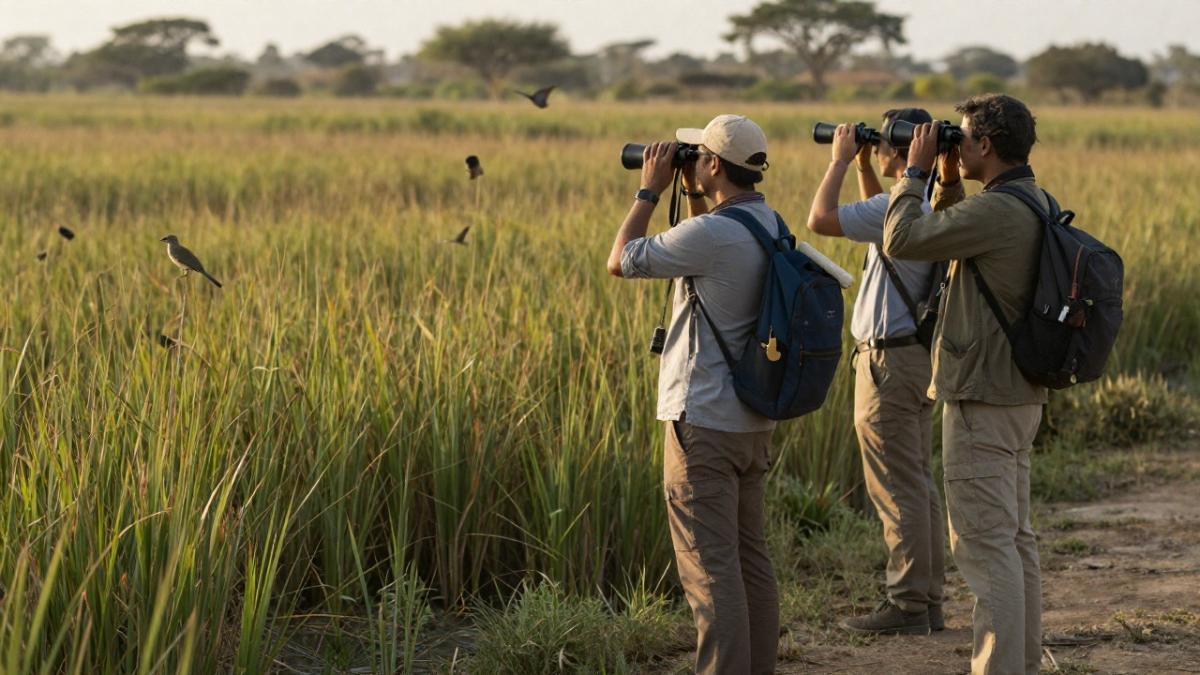
Start by sorting your targets into three habitat zones. Sahelian species sit north around the Ferlo; wetland birds cluster at Djoudj and the coastal lagoons; forest species favour Basse Casamance in the south. Three habitat zones in ten days is realistic. Five is not. Give your guide the sorted list and ask them to propose a route with travel days marked, because the distance between Djoudj and Basse Casamance is the constraint most first-time itineraries underestimate.
Then apply four planning rules that separate a workable private itinerary from an optimistic one:
- One anchor site per zone. Pick the site where your highest-priority target is most reliably recorded and build the zone around it. Secondary sites fill the margins.
- Two nights minimum per zone for photographers. Light and patience need time, and a guide who moves on after one morning will not deliver the images. Confirm in writing that the guide will wait at a stakeout rather than chase a longer list.
- A contingency day, not a contingency hope. Ask where the spare day sits in the route and what it is reserved for. A guide who cannot name the contingency target has not planned for a miss.
- Travel days counted honestly. Road conditions between the north and the south can consume a full day. If the guide's draft shows a morning drive and an afternoon session in a different zone, question it.
Photographers should also confirm the guide's vehicle has space for a beanbag and that the driver will cut the engine at a stakeout. These are small details that decide whether a private departure is worth the premium over a group tour. For the full list of sites, see our guide to the best birding locations in Senegal.
Watch out: a guide who agrees to every target on your list without flagging at least one as unrealistic for your dates is selling, not planning. The best guides push back early.
The Best Time for Birdwatching in Senegal
November to March is generally regarded as a good time for birdwatching in Senegal, when Palearctic migrants are present and the heat eases.
Outside that window, the picture changes. April and May bring intense heat and thinner migrant numbers. The green season from July to October delivers breeding plumage and dramatic skies, but remote roads turn difficult. Independent birders using eBird logged 111 species over six days in March 2026, which shows what a short shoulder-season trip can still deliver (eBird Senegal trip reports). Match your dates to your targets: migrants for winter, residents and photography light for the green season. Our seasonal timing guide breaks this down month by month.
What a Senegal Birding Tour Cost Actually Covers
A birding tour cost typically breaks into several components, including guiding, transport, park fees and accommodation. Pricing depends on quantity, dates and delivery, and current prices or a quote are available on the West African Birding website. Guiding rates vary widely depending on the provider and the level of service. Treat any single headline figure with suspicion until you see the breakdown.
A proper itemised quotation should show:
- Guiding days and daily rate
- 4x4 hire, driver and fuel
- National park permits and reserve entry
- Accommodation and meals, or a clear note that they are excluded
- Conservation contribution, if the operator makes one
The cheapest quote often excludes fuel and permits, which then appear as extras on the ground. Ask for the total landed cost for the full itinerary. Trip reports from past departures show what was actually delivered for the money, which is the fairest benchmark you will find.
Navigating Language Barriers and Ethical Birding
French is the working language of Senegal, and English is not universal outside tourist areas. A guide who moves fluently between both unlocks park staff, lodge owners and local contacts. Abdoulie Ndure, a bilingual French-English birding guide, is engaged by international birders specifically for cross-border work (BirdGuideGambia guide profile). If your French is limited, make bilingual guiding a booking condition, not a hope.
Ethical birding guidelines protect both birds and access:
- Keep a respectful distance and never flush a roosting bird
- Use playback sparingly, and never for threatened species in breeding season
- Stay on tracks and respect reserve rules
- Ask before photographing people or villages
- Pay guides and local staff directly and fairly
Community-vetted directories and operator networks increasingly screen for these standards (Fatbirder on responsible birding tours). Choose guides who volunteer their ethics policy without being asked. That single question tells you more than any review.
Plan Your Private Birding Trip with West African Birding
The challenge is not finding a guide; it is finding one whose experience, language skills and ethics match your targets. That is where we come in. West African Birding runs private, tailor-made itineraries across Senegal and The Gambia, led by an expert local guide. Groups are capped at six guests, itineraries are built around your target species and preferred pace, and five percent of revenue supports local conservation and community projects. Get started with West African Birding and turn your target list into a confirmed itinerary.
Frequently Asked Questions
How do I find a reliable private birding guide in Senegal?
Start with community-vetted directories, where guides list themselves and members leave feedback. Cross-check any name against trip reports and ask for past guest references. Specialist operators also refer trusted local guides, which is useful if you want a guide who already knows your target species. Confirm the guide's experience in the specific habitats you plan to visit, and agree the scope of the day in writing before you travel.
What should I ask a Senegal birding guide before booking?
Ask how many years they have guided in Senegal and The Gambia, which habitats they cover, and whether they can target your priority species such as the Egyptian Plover. Request a sample Senegal birdwatching itinerary with timings, confirm what transport and park permits are included, and ask what happens if weather or access changes the plan. Also check languages spoken, group size limits, and whether they carry a scope and field guide. A guide with substantial regional experience should answer all of this without hesitation.
What does a Senegal birding tour cost include?
Pricing depends on trip length, group size, transport, park entry fees and whether you book through an operator or directly. Pricing depends on quantity, dates and delivery, so please check the West African Birding website for current prices or a quote. Ask for an itemised quotation so you can see what is included, and confirm whether conservation contributions are separate.
When is the best time for birdwatching in Senegal?
The dry season, roughly November to April, is the most comfortable window and coincides with Palearctic migrants wintering in West African wetlands, so species counts are high. Book guides early for these months, as they are a popular time to visit.
